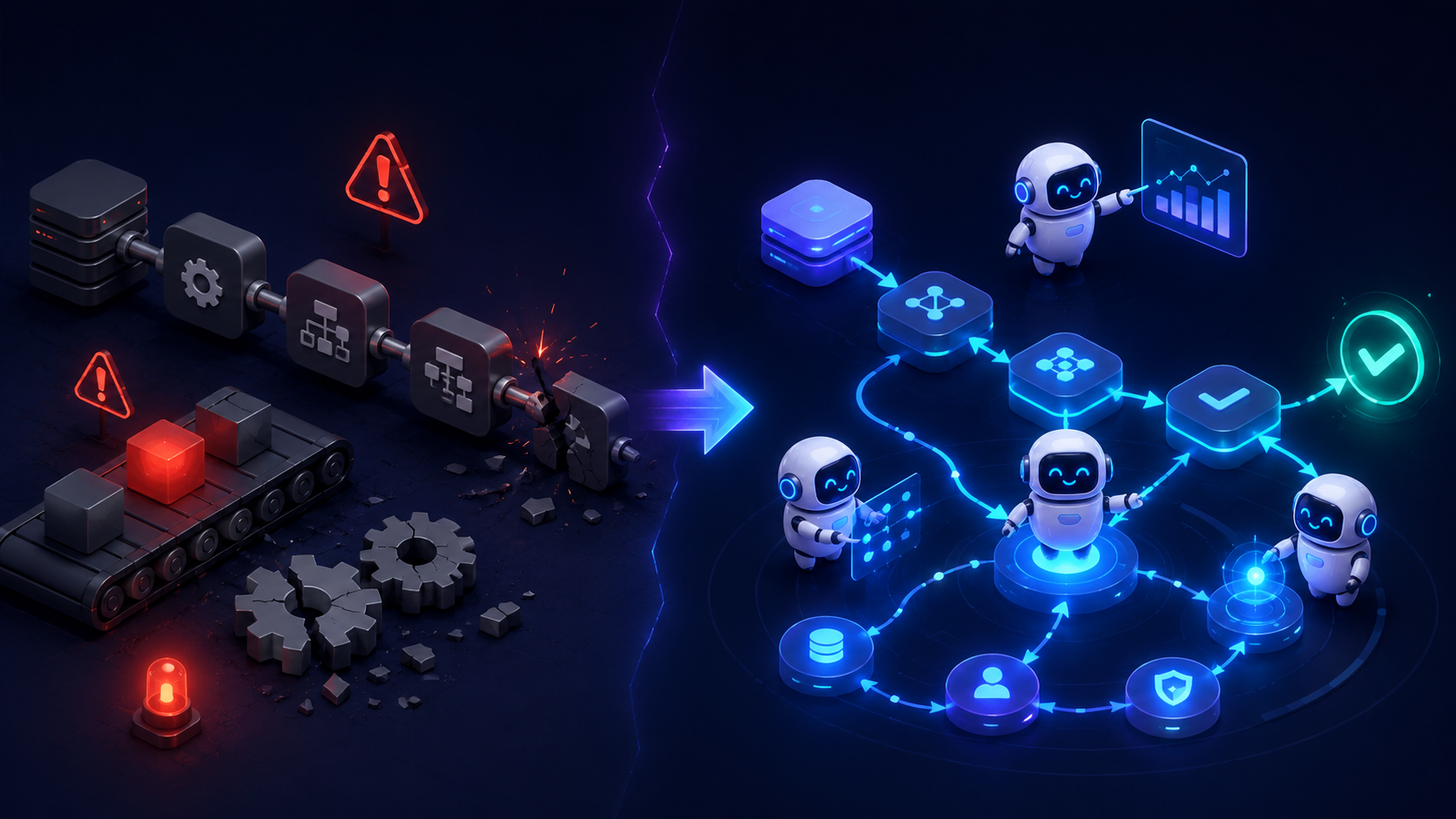
You built the automation. You sold the team on it. You budgeted for it, configured it, and launched it with real confidence.
And now someone's manually fixing it every other Monday.
That's not a tool problem. That's a strategy problem and it's more common than most agency owners and tech leads want to admit. The workflows that were supposed to eliminate manual work are generating a different kind of manual work.
The integrations that were supposed to connect your stack are held together with middleware that three people are afraid to touch. Your engineers are spending Friday afternoons debugging triggers instead of building the things that actually move your business forward. DO YOU KNOW WHERE YOU WENT WRONG ACTUALLY?
You didn't get sold a bad idea. You got sold an outdated version of a good one.
The thing is, most AI automation strategy running inside agencies today aren't really AI automation at all. They're rule-based systems dressed up in modern language and they were showing their limitations before you finished deploying them.
Keep reading to discover how you look at your current setup. We're going to show you exactly where legacy automation breaks down, what genuine AI agents do differently, and why Co-Ventech exists specifically to help agencies make this transition without burning down what's already working.
If you've been wondering why your automation investment hasn't delivered what it promised, you're about to find out why. And more importantly, what to do about it.
What Is AI Automation And Why Most Teams Are Running the Wrong Version?
Before diagnosing what's broken, it helps to clarify what AI automation actually means versus what most agencies are running today.
What is AI automation?
At its core, AI automation is the use of artificial intelligence to perform tasks, make decisions, and execute workflows without requiring a human to manage every step. It goes beyond scripted sequences. True AI automation adapts, reasons, and responds to changing conditions in real time.
What is AI Strategy?
Your AI strategy is the deliberate framework that defines how your organization adopts, integrates, and scales AI capabilities to meet specific business objectives. It's not just about picking tools, it's about aligning automation architecture with how your team actually operates and where you need to grow.
Most agencies today aren't running AI automation. They're running rule-based automation, conditional logic sequences that follow fixed if/then instructions. Tools like Zapier, Make, and older RPA platforms fall into this category. They're not inherently bad tools. But they were built for a more predictable operational environment than most agencies work in today.
The distinction matters because it determines everything: how your workflows respond to errors, how they scale, and whether they ever actually reduce your team's workload or just relocate it.
AI Automation Examples: What Agents Actually Look Like in Practice?
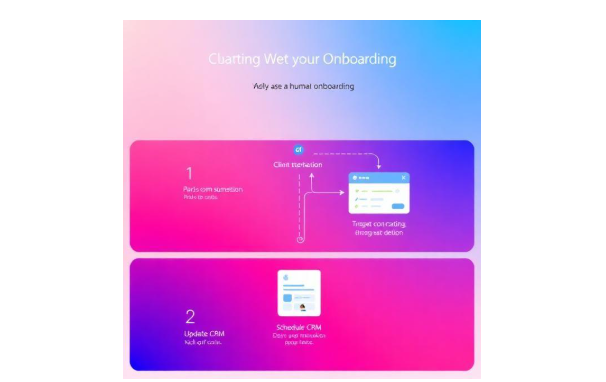
When people ask for AI automation examples, we point to what agents actually do that legacy tools can't:
- ✓A client submits an intake form. An AI agent reads the submission, identifies the service tier, generates a custom proposal draft, updates the CRM, and schedules a discovery call — all within minutes, without a human touching it.
- ✓A DevOps agent monitors deployment pipelines, detects an anomaly in test results, rolls back the build, logs the incident, and alerts the right engineer with a summary of what it found and why.
- ✓A content operations agent pulls performance data from analytics, identifies underperforming assets, flags them for review, and drafts a prioritized revision list — without a manual reporting cycle.
These aren't futuristic scenarios. These are workflows Co-Ventech's engineering team is building for agencies right now. The difference between these examples and what most teams are running isn't budget, it's architecture.
Why Your Current Automation Strategy is Failing?
Because your present automation plan relies on inflexible, rule-based tools (like RPA) meant for static environments rather than the dynamic, unpredictable processes of contemporary industry, it is probably failing.
High maintenance costs and "digitized dysfunction" result from traditional automation's inability to perform repetitive, organized operations when confronted with complex, unstructured data or edge cases.
The Problem: Over 70% of automation projects fail to deliver expected results because they automate broken processes, "digitizing dysfunction" rather than optimizing them first.
The Fix: AI Agents bring autonomy, reasoning, and adaptability to the table, handling exceptions, unstructured data, and end-to-end workflows that traditional tools cannot.
"Mirror Image" Fallacy
Automating inefficient manual processes directly, forcing automation to replicate human workarounds.
Brittle, Rule-Based Logic
Traditional automation (RPA) breaks when inputs change slightly (e.g., a changed invoice format).
Ignoring the Human Element
Developing automations without involving the end-users who understand the bottlenecks.
"Set and Forget" Syndrome
Treating automation as a one-time project instead of an ongoing optimization process.
Exception-Heavy Processes
Attempting to automate complex processes with numerous exceptions that require judgment, leading to constant human hand-offs.
Do Not Miss: "5 Signs Your Business Is Ready for an Agentic AI Transformation (And 3 Signs It's Not)"
How AI Agents Fix It?
AI Agents represent a shift from "executing scripts" to "achieving goals."
Handle Unstructured Data
Agents use LLMs to read, parse, and act on messy information like customer emails, contracts, or handwritten documents that trip up traditional bots.
Autonomous Decision-Making
Instead of failing when a script goes wrong, agents (like OpenAI's Operator) can reason, decide on a new plan, and execute tasks independently.
Exception Management
Agents can resolve exceptions within a workflow without reverting to a human. For example, if an invoice is rejected, an agent can figure out why, contact the vendor, and correct the error.
Adaptability and Learning
Agents continuously learn from past actions and outcomes, getting more accurate over time, rather than remaining static.
End-to-End Workflow Optimization
Agents connect different tools (CRM, email, database) to manage complex tasks—like customer onboarding or vendor payments—from start to finish.
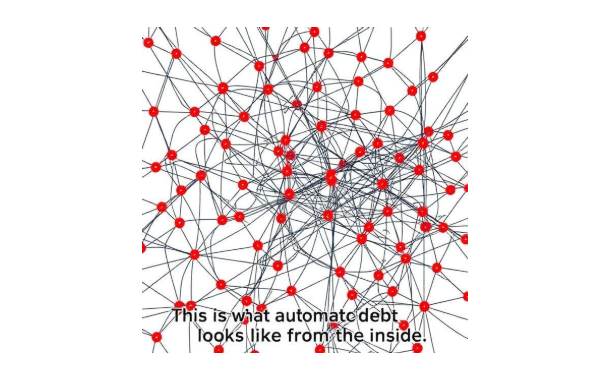
The 4 Ways Your Current Automation Setup Is Working Against You
We see the same failure patterns across agencies and tech teams regardless of industry or stack size. Here's where legacy automation consistently breaks down:
#1. It follows instructions. It doesn't make decisions.
The moment an input doesn't match what the workflow expects, a changed field name, an updated API response, an unanticipated edge case, the system stops. Someone gets an alert. Someone investigates. Someone manually resolves it. The workload the automation was supposed to absorb lands right back on your team.
#2. It doesn't learn from what goes wrong.
Automating tasks using AI means building systems that get smarter over time. Legacy tools don't do that. A rule-based workflow that produces errors 20% of the time will continue producing errors 20% of the time until a human diagnoses it and rebuilds the logic from scratch. There's no feedback loop. No self-correction.
#3. Scaling it creates more complexity, not less.
Going from 10 automated workflows to 50 doesn't deliver 5x efficiency. It delivers 5x maintenance. Every new process adds conditional branches, custom middleware, and configuration overhead. Engineering hours that belong on product development get absorbed by upkeep.
#4. It reports on activity, not outcomes.
Most legacy AI automation tools track task completion: records updated, emails sent, triggers fired. What they can't tell you is whether any of it moved a business metric. You get data on system activity, not on whether your automation strategy is working.
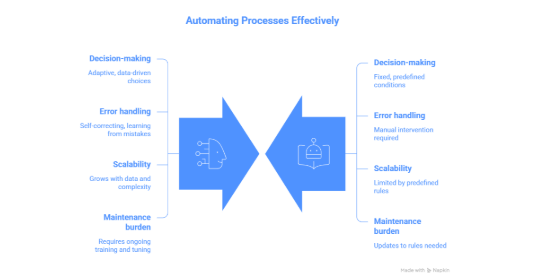
| Key Differences: Traditional Automation vs. Agents | ||
|---|---|---|
| Feature | Traditional Automation (RPA) | AI Agents |
| Logic | Rigid, rule-based if-then-else | Goal-oriented, adaptive reasoning |
| Adaptability | Fails when conditions change | Thrives in dynamic environments |
| Data Handling | Structured data only | Messy, unstructured text/images |
| Exception Handling | Human intervention required | Autonomous resolution |
| Maintenance | High (manual updates) | Low (self-improves) |
How Can AI Transform Your Business? Start With the Infrastructure Layer
The honest answer is: not through tools alone. Transformation happens when AI is embedded into the operational layer of how your agency delivers work, not bolted on top of broken processes.
Here's what that shift produces when it's done right:
- ✓Fewer manual interventions across client delivery workflows
- ✓Faster turnaround on repeatable processes without adding headcount
- ✓Engineering capacity redirected from maintenance to product development
- ✓Workflows that adapt to business rule changes without full rebuilds
- ✓Measurable outcome tracking tied to actual business metrics, not just task logs
We've seen agencies reclaim 15–20 hours of engineering time per week simply by replacing brittle rule-based sequences with agent-driven workflows. That's not a marginal improvement, but a structural shift in what your team can deliver.
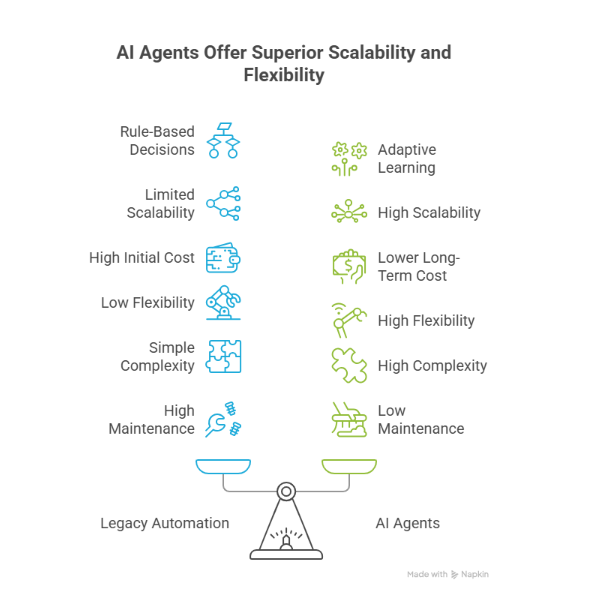
Legacy Automation vs. AI Agents — The Real Comparison
This isn't a close comparison. Automating tasks using AI through an agent architecture removes the ceiling that rule-based systems impose on your team's time, your operational scalability, and your clients' experience of working with you.
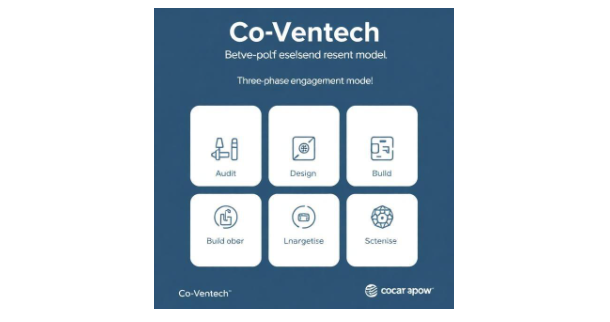
How Co-Ventech Builds the Automation Infrastructure Agencies Actually Need?
We're not an automation vendor. We're an engineering team that builds the custom infrastructure agencies need when off-the-shelf platforms have hit their limits.
When we work with an agency or tech team, we start with a clear audit of what's actually failing in your current AI automation strategy, what's generating maintenance overhead, where edge cases are breaking workflows, and where the biggest efficiency gaps live. From that audit, we design an agentic architecture that fits how your team operates, not how a SaaS platform assumes you should.
Because our work spans custom software development, QA, and DevOps, the agents we build aren't just smart but also tested, reliable, and deployed on infrastructure that supports long-term performance. We don't hand off a prototype and disappear. We build systems that get more effective over time.
The Cost of Staying With What Isn't Working
Every month your team runs on legacy automation is a month of compounding technical debt. Maintenance hours accumulate. Edge cases multiply. And the operational gap between your agency and competitors running intelligent infrastructure quietly widens.
Automating tasks using AI the right way isn't a future initiative. It's a present competitive condition. The agencies that treated the shift to agents as optional in 2023 are feeling the friction in 2025 in slower delivery cycles, higher engineering overhead, and clients who can tell the difference.
Your current setup isn't a long-term foundation. It's a temporary solution that's already past its shelf life.
Your AI Automation Strategy Deserves Better Architecture
Your AI automation strategy didn't fail because of a bad decision. It failed because the tools available when you built it couldn't anticipate the operational complexity you're running now. Rule-based automation was the right answer to an older problem.
The problem has changed. The infrastructure needs to catch up.
We built Co-Ventech to solve exactly this, helping agencies and tech teams move from automation that requires constant rescue to agent-driven systems that deliver consistent, measurable outcomes. The transition doesn't require tearing down what's working. It requires building something smarter around your existing foundation.
If your automation is generating more overhead than output, let's fix that.
Talk to Co-Ventech's engineering team →
The audit is free. The delay isn't.