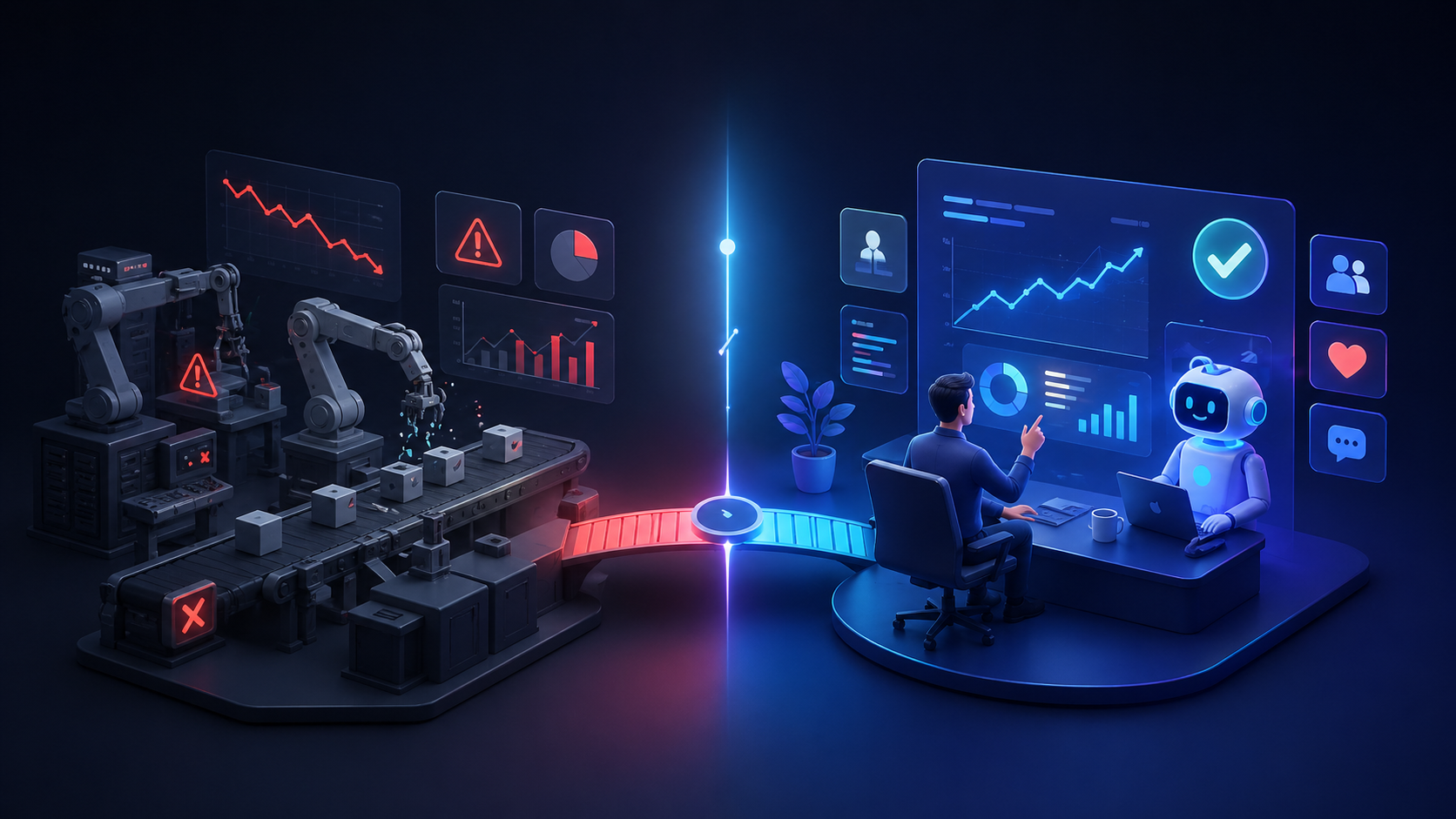
The chaos of innovation versus traditional labor was going on and on. Co-Ventech appears as the ultimate solution, refining the tech landscape and changing the vision with its human centered AI approach.
We have watched the tech industry chase a ghost for the last few years: the dream of the lights-out enterprise where software builds itself and QA is handled entirely by bots. As a digital innovator at Co-Ventech, I have seen the fallout of this approach: broken deployments, sterile user experiences, and hallucinated code that creates more work than it saves.
The myth we are busting today is simple: 100% autonomy is not the goal; it is a liability. This take emphasizes a critical question: why a human centered AI innovative approach is the only way to build sustainable, high-growth software in a post-hype world?
By the end of this read, you will understand how to leverage machine speed without sacrificing the human intuition that prevents catastrophic technical debt.
Human-Centered AI: Definition, Innovation, and Why Replacing All Human Labor Fails
A harmful fallacy that often leads to higher error rates, poor decision-making, and serious operational risks is the idea that artificial intelligence should completely replace human labor, achieving 100% autonomy. AI is excellent at handling high-volume, repetitive tasks, but it struggles with ambiguity, context, and moral judgment.
By emphasizing augmentation, fostering creativity, and upholding responsibility, human-centered AI (Human-in-the-Loop)—in which AI collaborates with human intellect—surpasses complete automation.
Human-Centered AI Examples: Empathy, Collaboration, and Real-World Tools
Examples of Human-Centered AI (HCAI) include tools that emphasize empathy, collaboration, and usability to enhance human capabilities rather than replace them. Important examples include AI-powered accessibility solutions, individualized education platforms, GitHub Copilot for coding, Microsoft DAX for clinical documentation, and intelligent assistants like Siri that automate repetitive chores.
Some of the best examples in practice include:
Healthcare (Microsoft DAX / MAI-DxO): AI serves as an ambient assistant, listening to patient visits and summarizing notes so that medical professionals can concentrate on the patient rather than a computer screen.
GitHub Copilot (software development): AI acts as a pair programmer by recommending code snippets that increase efficiency without assuming the human developer logic and design duties.
Technology that is accessible: AI-powered devices that translate speech into text, describe pictures for people with visual impairments, or offer real-time translation to improve communication.
Personalized education: Platforms that adapt to a student pace of learning and offer tailored content that complements teachers rather than takes their place.
Astute customer support: AI that supports agents by providing up-to-date knowledge so they can address problems more quickly and sympathetically.
Safety and forecasting: AI that analyzes local data to forecast health concerns (like flu outbreaks) or traffic bottlenecks to help people make better decisions.
The Myth of 100% Automation
“Black Box” Risks — Fully autonomous systems can fail unexpectedly, leading to silent failures in which errors are not immediately detected until they cause significant damage.
The Paradox of Automation — The more efficient an automated system, the more critical human intervention becomes. If an autonomous system malfunctions, it multiplies errors rapidly before being shut down.
Contextual Blindness — Because AI relies on static, preprogrammed data, it is unsuited for complex, unstructured real-world situations that call for emotional intelligence.
Misleading Marketing — Many AI agents that claim to be completely autonomous frequently rely on low-cost, covert human labor to carry out, label, or verify tasks.
Why Human-Centered AI Beats 100% Autonomy?
Human-centered AI merges the efficiency of machines with human judgment, ensuring that technology serves human needs rather than replacing them.
Superior Decision-Making (60/30/10 Rule)
Sixty percent automation (hard-coded logic), thirty percent AI (unstructured data processing), and ten percent human judgment (final approval) are typical components of effective systems. Humans can focus on strategy rather than tedious tasks thanks to this hybrid paradigm.
Ethical Oversight and Trust
Human operators ensure AI aligns with ethical standards, reducing bias and mitigating the risks of misinformation and hallucinations.
Adaptability to Ambiguity
When processes deviate from the norm, humans can interpret context and adjust, whereas autonomous systems struggle with novel situations.
Improved Safety and Engagement
By assigning dull, dirty, and dangerous tasks to AI, human workers are freed to focus on higher-value activities that require creative thinking and empathy.
Key Benefits of Human-in-the-Loop (HITL)
✅ Risk Mitigation: Human oversight reduces the chances of catastrophic, automated errors, especially in high-stakes industries like healthcare or finance.
✅ Continuous Learning: Human corrections provide immediate feedback, allowing AI models to improve over time rather than drift in accuracy.
✅ Accountability: It keeps a clear "approval trail," which is essential for regulatory compliance, unlike the opaque decisions of fully autonomous systems.
Ultimately, the future of work is not about replacing employees but augmenting them, creating digital employees that handle the tedious tasks so humans can act as conductors or quality orchestrators of AI-driven output.
Why Autonomy Fails Where Professionals Succeed
We have noticed a pattern: 100% autonomous systems fail because they lack contextual awareness. A bot can find a bug in a line of code, but it cannot tell you if that bug actually ruins the user journey. This is why human centered AI professionals are the most critical asset in any modern dev shop.
At Co-Ventech, our team uses AI to handle the toil—the repetitive, high-volume data crunching—while our engineers focus on high-level architecture and creative problem-solving. This marks another set of human-centered AI examples in the industry today: using machine learning to predict server loads in DevOps, but letting a human architect decide how to scale the infrastructure to meet long-term business goals.
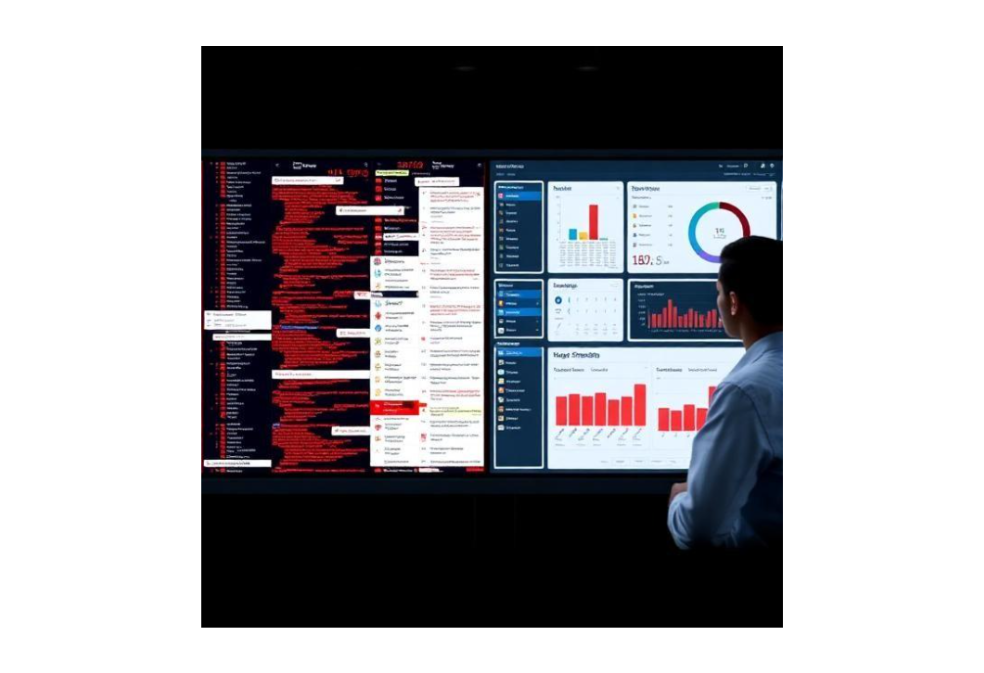
The Co-Ventech Difference in the USA Market
When looking for human-centered AI services USA, tech leads often struggle to find a partner that balances speed with responsiveness. We pride ourselves on the Bluefin Standard—a reference to our collaboration with Bluefin where our CEO-level responsiveness ensured the project never hit a bottleneck. Unlike black-box AI agencies, Co-Ventech maintains a transparent lifecycle.
We do not just hand you an algorithm; we provide a collaborative ecosystem. This is the hallmark of human centered software development: building tools that people actually enjoy using. Our expertise in DevOps and digital product design is backed by a portfolio of case studies that prove human-in-the-loop systems outperform AI-only systems in every key performance metric, from user retention to deployment frequency.
Stop Chasing Autonomy: Engineer for the Real World
The automation-only dream is a race to the bottom. When you remove human intuition from the equation, you are not just cutting costs; you are cutting out the soul and security of your product. In a marketplace where every competitor has access to the same LLMs and automation scripts, your only true differentiator is the human intelligence behind your tech stack.
Co-Ventech does not just offer services; we offer a partnership that prioritizes your brand longevity. By choosing a human centered AI innovative approach, you ensure that your software remains agile, your DevOps stay resilient, and your user experience stays authentically human. We have seen the results with partners like Bluefin, and we know that the most successful projects of the next decade will not be the ones that used the most bots—they will be the ones that empowered the best people.
Ready to outpace the competition? Whether you are looking to scale your development or bulletproof your QA, our team is ready to turn your vision into a market-leading reality. Visit the Co-Ventech Portfolio today to see how our human-centered engineering talent can transform your next project. For more about our work, see co-ventech.com.